• Skip to main content
  • Skip to secondary menu
  • Skip to primary sidebar
  • Skip to footer
World Tennis Magazine

World Tennis Magazine

Unique Tennis Perspectives

  • Home
  • World Tennis with Harry Cicma
  • Staff
  • About
  • Contact Us
  • Forum

life drama

40 Years ago at the Davis Cup Final

December 4, 2010 by WTM

Forty years ago in 1970 was a signature year for Cliff Richey. The American tennis great, who with sister Nancy Richey make up the greatest brother-sister combination inU.S. tennis history, was a semifinalist at the French and U.S. Opens, finished as the top-ranked player in the nascent year-end “points standings” and was the most valuable player in the U.S. Davis Cup team’s triumph over Germany in the Davis Cup Final.
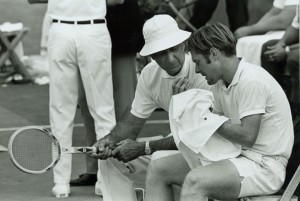
Cliff Richey

In his new book ACING DEPRESSION: A TENNIS CHAMPION’S TOUGHEST MATCH ($19.95, New Chapter Press, www.CliffRicheyBook.com), Richey discusses the 1970 Davis Cup final and his signature year. In ACING DEPRESSION, Richey calls depression among adult males as “the silent tragedy in our culture today” and details his life-long battle with the disease that afflicts approximately 121 million people around the world. Co-written with his oldest daughter, Hilaire Richey Kallendorf, ACING DEPRESSION is a first-hand account of the life and tennis career of Richey, providing readers with his real-life drama – on and off the tennis court. Richey’s depression is a constant theme, from his genetics and family history, to the tensions of his professional tennis career and family life, to his eventual diagnosis and steps to recover from his condition.

The book excerpt is found below:

The 1970 year was my signature year—my best season. All that year I was up, up, up. Winning, winning, winning. I played 112 matches that year and won 93 of them. I lost only 19 times that year, not counting Davis Cup or exhibition matches. I won the first World Point Title (the Pepsi Cola Grand Prix) and was ranked No. 1 in the United States. I won the U.S. National Clay Court title and reached the semifinals of the U.S. Open and the French Open. I also led the United States to a repeat victory in the Davis Cup—while being named Davis Cup MVP to boot.

When I was named the Davis Cup’s Most Valuable Player, it was a surprise. I don’t know who decided it. I think it was the sports writers. I was as surprised as anyone. They gave me a trophy. I didn’t even know there was an MVP award. Those kinds of awards never meant a whole lot to me, really, because I knew they were all so political. I don’t like hoping someone likes you well enough to give you something. I’d rather earn it.

The press knew there had been some controversy over whether I would even be named to play that year. They had held a reception in Shaker Square (in Shaker Heights, a fancy neighborhood in Cleveland) for the purpose of announcing the Davis Cup draw for the final against West Germany. We all knew Stan Smith and Bob Lutz would play the doubles. As far as the singles players, it would be Arthur Ashe for sure but in the other singles slot, it was going to be Stan Smith or me. I would have walked out if they had named Smith to play. The previous year Donald Dell, the non-playing captain, had picked Stan over me because he was Stan’s agent, not mine. But this time, it was my name that was drawn out of the Davis Cup trophy during the draw. Fred Stolle, the great Australian player and the coach for the German team, told the press I would be easy to beat. He predicted I would choke. He thought I wouldn’t be able to handle the pressure of representing my country for the world team championship. As it turned out, I won both of my singles matches and we beat the Germans 5-0. So that might have helped me win MVP: I didn’t choke as expected! I think I may have gotten a few sympathy votes.

It was kind of ironic that I won the first Grand Prix point title after objecting to the very idea of the whole thing. What used to be the Grand Prix is now the ATP Champions’ Race that players like Pete Sampras and Roger Federer won many times. I won the first Grand Prix ever. Originally it was sponsored by Pepsi Cola, although other companies joined in on subsequent years including Nabisco and IBM. It started as a way to attract more world interest to the game. The contest began in May at the French Open and all the tournaments were worth points. That year, I “chased” points, so to speak. I played a lot of tennis that year. These days they have computers to tabulate wins and losses, but back in 1970, we just had someone sitting in a central office, keeping track. I remember being in Stockholm at the last point tournament of the year. I knew I was close to winning the title. I called over to London to the headquarters of the International Lawn Tennis Federation to find out how many points I had. “Where do I stand?” I asked. I was told that if I won one match in Stockholm, I would tie for the Grand Prix point title with Arthur Ashe, even if he won the tournament. I would be sitting pretty. If I won two matches, I would win the Grand Prix title outright.

I had lousy luck with the draw. I’m not saying they rigged it, but normally the best players are seeded so they’re protected from each other until the end. In the first round, I played Andrés Gimeno from Spain, who had reached the semis of Wimbledon. He should have been seeded, but he wasn’t. People fight over the draws in tennis.

There are rumors of cockamamy excuses for why draws need to be redone. I was not a popular player. I really had to question why they had me playing Andrés in the first round. I beat him 21-19, 6-1. I clinched the point title outright in the second round when I beat Zeljko Franulovic of Yugoslavia 6-1, 8-10, 6-3. They had a point board posted at the tournament. There’s a picture of me using my racquet to show the total number of points on the board. The point race was over before the tournament was even finished. The reason I didn’t like the idea of the Grand Prix in the first place, as I told Jack Kramer at the time, was that the players would get exhausted. And then I ended up winning the darn thing! But I had predicted correctly. The week after Stockholm, we flew to Tokyo for the Masters’ Championship. I was so tired when we got there, I was sleeping 17 hours a night. I went to see a doctor in Tokyo who thought I might have hepatitis. He said I should not play the tournament.

I went to the auditorium and hunted down Jack Kramer. I wanted to tell him personally why I couldn’t play. He thought because it was an indoor, fast surface inTokyo, I was backing out because I thought I might lose. I had always been known as more of a clay court player, but I had just won on two super fast surfaces! A few weeks prior to that, I had beaten Ken Rosewall in London on a lightning-fast court, right after he won the U.S. Open. The next week in Stockholm on another fast surface, linoleum, I also beat Gimeno; so the idea that I might be scared of fast surfaces was a joke. I was just run-down and fatigued. In the end, as it turns out, I was right. I had just played 30 tournaments, spread out to the four corners of the globe. In the run-up to the Grand Prix, they played us to death.

The other funny thing that happened when I won the World Point Title was that I won $25,000 in bonus money, but no trophy. I always played for the trophy, not the money. The trophy was something more tangible. I said to Jack Kramer, “Why didn’t you guys give me a trophy?” The ILTF took my complaint to heart.

They actually presented me with a trophy a year later! I had to shame them into it. I wanted the damn trophy! They rustled one up a year later at the Masters in Paris. The inscription reads: “Pepsi Grand Prix 1970, Cliff Richey.” To this day, it is one of only two trophies I keep on display in our home.

Sometimes when I’m feeling blue, I’ll write down my five greatest tennis accomplishments:

1. World Point Title (Grand Prix)

2. Two-time Davis Cup Champion and MVP

3. U.S. No. 1 Ranking

4. 45 tournament wins

5. Legends Senior Tour Champion

Strangely, even when I write it down, it doesn’t sink in. But at least three out of those five successes occurred in the same year, 1970. The No. 1 ranking was the last to fall into place, after that “Sudden Death” match against Stan Smith. At that point, emotionally, I could be described as somewhat crazed. Arthur Ashe said he worried about me because he thought I would burn out too quickly. Those words of his turned out to be prophetic.
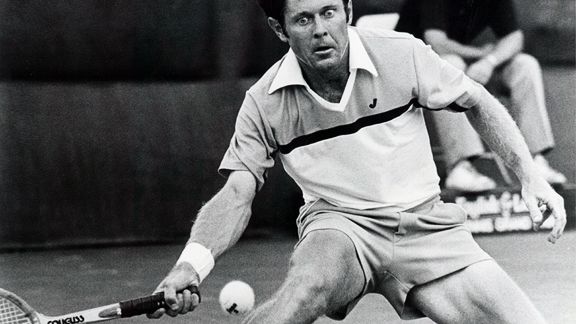
Cliff Richey Continues Mental Health Crusade in New York at 2010 US Open

September 3, 2010 by WTM

NEW YORK – Cliff Richey, the tennis standout who ranked as the No. 1 tennis player in the United States 40 years ago in 1970, will continue his mental health advocacy crusade in New York at the 2010 US Open with several speeches and appearances to raise awareness and help people overcome depression and de-stigmatize the illness.

Richey, along with his sister Nancy Richey, a member of the International Tennis Hall of Fame, will headline a fund-raiser for the Riverdale Mental Health Association on Tuesday, September 7 at the Riverdale Yacht Club. Richey, a high-school dropout, will also speak at Columbia University’s Department of Psychiatry on Friday, September 10. He will also conduct a signing for his new book ACING DEPRESSION: A Tennis Champion’s Toughest Match on Monday, September 6 at 5 pm at the US Open Bookstore on site at the Billie Jean King USTA National Tennis Center.

In ACING DEPRESSION, Richey calls depression among adult males “the silent tragedy in our culture today” and details his life-long battle with the disease that afflicts approximately 121 million people around the world. Co-written with his oldest daughter, Hilaire Richey Kallendorf, ACING DEPRESSION ($19.95, New Chapter Press, www.CliffRicheyBook.com), is a first-hand account of the life and tennis career of Richey, providing readers with his real-life drama – on and off the tennis court. Richey’s depression is a constant theme, from his genetics and family history, to the tensions of his professional tennis career and family life, to his eventual diagnosis and steps to recover from his condition.

Cliff Richey

Jimmy Connors, the five-time U.S. Open champion and a friend of Richey, penned the Foreword for ACING DEPRESSION. Writes Connors, “What made Cliff Richey what he was on the tennis court has certainly carried over into this book. His story has taken a subject, depression—which has affected him personally—and put it out there for everyone to see. Depression has been a subject that no one really talks about. Few people even admit to having such a condition. But Cliff is not afraid to be bold and reveal what he has gone through and what it takes to get a handle on this disease…Just as Cliff played tennis, he is studying how depression works; what its weaknesses are; and what strategies you can use against it. His hope is that people who read his story can learn—learn about the disease and learn that people who suffer can have a better quality of life. Things can get better. There is hope.”

Richey and his sister Nancy, a former French and Australian singles champion, will hit tennis balls, provide instruction and speak at the fund-raiser for the Riverdale Mental Health Association. The event will be held from 5 pm to 7 pm at the Riverdale Yacht Club, 800 West 254th Street and Palisade Avenue in the Bronx. Tickets are available for $150 per person, $250 per couple and $50 per child and can be purchased by emailing alange@rmha.org or calling 718-796-5300 x106. Preceding the fundraiser, Richey will visit the RMHA offices to tour the facilities and speak with clinicians. For more information on the RMHA, go to www.rmha.org.

Richey was known as the original “Bad Boy” of tennis, before there was John McEnroe and Ilie Nastase. His 26-year career was highlighted by a 1970 season where he led the United States to the Davis Cup title, finished as the first-ever Grand Prix world points champion and won one of the most exciting matches in American tennis history that clinched the year-end No. 1 American ranking. However, his tantrums and boorish behavior simply served as a mask for his internal struggle with clinical depression. During his darkest days, Richey would place black trash bags over the windows of his house, stay in bed all day and cry. With the same determination that earned him the nick-name “The Bull,” Richey fought against his depression that was not diagnosed until just before his 50th birthday during a routine visit to the skin doctor. Since his happenstance diagnosis, Richey has steadily been taking anti-depressant drugs that has greatly improved his quality of life and moved him to
become an advocate for mental health, speaking at numerous events and gatherings across the country.

“I have been given so many second chances in my life,” Richey says in the book. “The beautiful thing is that in recovery, almost everything in your life becomes a second chance. Hope is the foundation of our great country of America. Hope is such a driver of the normal human condition. The sum total of my awful disease was “loss of hope.” That’s the truly awesome thing about recovery: once you come back, your whole life after that feels like a second chance.”

The book has also received acclaim and endorsements in the mental health community.

Says Jackie Shannon, the Past President of the National Alliance on Mental Illness (NAMI), “Real men do get depression—even champion athletes. Cliff’s story is an inspiration to all those who are battling mental illnesses and a wake-up call to the public.” Says Lynn Lasky Clark, President and CEO of Mental Health America of Texas, “This straight forward, honest and intensely personal account of Cliff Richey’s experiences with tennis and depression is truly inspirational. Cliff Richey approaches his recovery from depression with great passion and determination. He provides hope and understanding through this powerful memoir.” Say Lynn Rutland, the Executive Director of MHMR (Mental Health, Mental Retardation), “The Richey’s inspired a whole generation of kids to believe in themselves and strive for excellence. Cliff’s story gives people hope when life has dealt them darkness. The battle for the mind is one that Cliff will never lose through lack of effort as he offers insight
into his own struggles and victories. His story will continue to make a difference for those suffering with depression.”

ACING DEPRESSION is published by New Chapter Press – also the publisher of The Roger Federer Story, Quest for Perfection by Rene Stauffer, The Bud Collins History of Tennis by Bud Collins, The Education of a Tennis Player by Rod Laver, Tennis Made Easy by Kelly Gunterman, Boycott: Stolen Dreams of the 1980 Moscow Olympic Games by Tom Caraccioli and Jerry Caraccioli, The Lennon Prophecy by Joe Niezgoda, Bone Appetit, Gourmet Cooking For Your Dog by Susan Anson, The Rules of Neighborhood Poker According to Hoyle by Stewart Wolpin, People’s Choice Cancun – Travel Survey Guidebook by Eric Rabinowitz and Weekend Warriors: The Men of Professional Lacrosse by Jack McDermott, among others. Founded in 1987, New Chapter Press is an independent publisher of books and part of the Independent Publishers Group. More information can be found at www.NewChapterMedia.com.

THE ANALYSIS OF THE CHOKE

June 4, 2010 by WTM

While watching the highest level of professional tennis at the French Open, choking has been seen in many matches and likely more matches down the road. Players will be in a position to win a big match or beat a high-ranked player – or in some cases lesser players – and they will not be able to execute and close out the match. It makes for excellent drama.

Forty years ago, top American player Cliff Richey experienced the biggest disappointment of his career. Remember the buzz that the French Open had as an American man was not able to win the title since Tony Trabert in 1955? The U.S. futility streak was finally broken by Michael Chang in 1989 after a 34-year drought. Richey had a good chance of joining the elite list of American men to win at Roland Garros in 1970, where he would have become only the sixth American to win in the clay of Paris. (Only eight U.S. men have won at Roland Garros, Andre Agassi in 1999 http://www.worldtennismagazine.com/wp-admin/post-new.phpbeing the last.) In the semifinals against Zeljko Franulovic, he was one swing of the racquet away from reaching the French final, where he would have played Jan Kodes, a player who later admitted that he had no chance of winning against Richey. Despite being up two-sets-to-one, 5-1 in the fourth set and having two match points, Richey was defeated 6-4, 4-6, 1-6, 7-5, 7-5.

In his new book ACING DEPRESSION: A TENNIS CHAMPION’S TOUGHEST MATCH ($19.95, New Chapter Press, www.CliffRicheyBook.com), Richey discusses choking – in the context of tennis as well as in his life living with depression – as well as the happenings from Roland Garros from 40 years ago. Co-written with his oldest daughter Hilaire Richey Kallendorf, ACING DEPRESSION is an inspiring first-hand account of the life and tennis career of Richey, providing readers with his real-life drama – on and off the tennis court. An excerpt from the chapter of the book called “Starting to Choke” is featured below.

Choke” is the word we use to describe what happens when a player is not performing well at a crucial moment in competition. We all have choked on some matches. There are certain areas of a match where a player is more likely to choke, like when he is serving for the match. When I started getting into the choke area of a match, I started getting defensive with my shots. By contrast, when Arthur Ashe choked, he got too aggressive. So everyone chokes in his own different way.

There’s a battle going on out there between two minds. I could sense when someone was starting to break down mentally. In the crunch time, it’s easy to get nervous and choke from wanting to win it too badly. One of the most difficult areas of a match mentally is right at the time you feel like you’ve got it done. You need to close the deal. That’s the clincher. Seal it in the envelope and put it in the mail.

I had a way of playing that wasn’t the easiest when it came time to close out a match. It’s easier to win at big moments with weapons like a huge serve. I didn’t have a serve powerful enough to knock anybody off the court, so I had to find alternative ways to win. I never worried if other players thought I had a tendency to choke in a tough spot. Fred Stolle predicted I would choke in 1970 when I led the American team to victory in Davis Cup. But I didn’t. Nor did I choke in the famous “Sudden Death” match that decided the No. 1 U.S. ranking that year against Stan Smith. So in the choking area, I disproved my critics at least as many times as I proved them right.

The first time I remember starting to choke in a big match was the summer of 1962. I was 15 years old and playing in the USTA National Boys’ 16s Championships. I grabbed Dad and said, “Hey, I need to talk to you.” We went into the dorm room alone. I told him that I was feeling apprehensive. He grinned and said, “You’re feeling pressure. You’re blanking out on us here.” By following his advice on how to cope with the pressure, I was able to go out and win the tournament.

The same thing happened when I won the U.S. Clay Court Championships in Indianapolis in 1970. I was playing against Stan Smith in the final with Dad there watching the match. He was glaring at me from the stands. I won the first two sets 6-2, 10-8, but lost the third set 6-3. Back in those days, we always took a break after the third set of a five-set match. During the break, Dad came into the locker room and started reading me the riot act on how I should go out and play. I had to win one more set somehow. He basically just grabbed me by the shoulders and told me I had gotten too cautious. I went out and won 6-1 in the fourth.

At the time, his words sounded harsh, but he wasn’t trying to hurt my feelings. He was just being brutally honest. He was right on the money. That’s why coaches are so valuable. I didn’t realize that I had gotten too cautious and was trying to just wish victory instead of making it happen.

Those are some examples of times when I felt myself starting to choke. However, the all-time tough one was when I lost to Zeljko Franulovic in the semifinals of the French Open in 1970. Mom and Dad flew over to Paris to watch me play. On the court that day, I would be the first one in the world to say that I choked. It was a choke job. I got more nervous than I should have. At one point in the match, I questioned a line call. I still think I was right, but I shouldn’t have done it. It turned the crowd against me. French crowds are very excitable. I had three different match points. During the last one in particular, I really choked as I hit the ball off the wood frame. Zeljko was so far away, he was over there in East Paris someplace and all I had to do was hit it into the open court.

But I choked. I got upset when the crowd turned on me. I lost 7-5 in the fifth. I had that match on my racquet and in my hand. All I had to do was stick it in my pocket! It was my tournament to win or lose and I handed it back. . . . I would have played a guy in the final, Jan Kodes, to whom I had literally never lost. Kodes and I had breakfast together four years later at the CBS Tennis Classic and he told me, “Cliff, you know I could not have beaten you.” The French Open was mine to lose.

After that match, I was as mad and upset as I’ve ever been for losing a tennis match. I was beside myself. I always carried a tournament bag. I remember taking the tournament duffle bag that I always carried with me and heaving it across the player lounge. I was devastated. I just wigged out. If someone asked me, “Were you momentarily insane?” I would have to say, yeah, I was goofy nuts.

I mentally and emotionally snapped. It wasn’t like I snapped out on the court. I never lost my temper once while I was on the court that day. But afterward, in the player lounge, I took my racquet and started beating it against the backs of chairs. I was really scaring Mom. She kept saying, “Cliff, just calm down!”

In all ways, that’s the worst loss I ever had. To this day, it bothers me. That’s the loss that affected me the most—the one that really got to me. The next day, Nancy and Mickie wanted to do some sightseeing in Paris. I guess I decided to go with them because I didn’t want to be alone at the hotel. I was still too upset. It was an awful day.

FORMER U.S. NO. 1 CLIFF RICHEY LAUNCHES NEW BOOK ACING DEPRESSION IN HOUSTON

April 6, 2010 by WTM

HOUSTON, Texas, April 6, 2010 – Cliff Richey, who 40 years ago was the No. 1-ranked American tennis player, the hero of the championship-winning U.S. Davis Cup team and the winner of the first-ever professional Grand Prix points title, in a new book discusses the most difficult opponent of his life, depression.

In his newly-released book “Acing Depression: A Tennis Champions Toughest Match,” Richey calls depression among adult males as “the silent tragedy in our culture today” and details his life-long battle with the disease that afflicts approximately 121 million people around the world.

Acing Depression
Cliff Richey (left) launched his book “Acing Depression” at the Houston Racquet Club, the same facility where sister Nancy (right) turned professional, along with eight other women including Billie Jean King, for one dollar in the first ever professional women’s tennis tournament that eventually lead to the founding of the modern day WTA Tour.

Richey, along with his Hall of Fame tennis-playing sister Nancy Richey, launched the book Tuesday during a luncheon sponsored by the United States Professional Tennis Association (USPTA) and attended by officials from Mental Health America (MHA) in his former hometown, Houston, Texas, at the Houston Racquet Club. The famed tennis facility was also the site of the first ever women’s professional tennis tournament in 1970 where Nancy Richey, along with eight other women tennis players lead by Billie Jean King, famously turned professional for one dollar and started the modern day Women’s Tennis Association (WTA) Tour.

Co-written with his oldest daughter Hilaire Richey Kallendorf, ACING DEPRESSION ($19.95, New Chapter Press, www.NewChapterMedia.com), is a first-hand account of the life and tennis career of Richey, providing readers with his real-life drama – on and off the tennis court. Richey’s depression is a constant theme, from his genetics and family history, to the tensions of his professional tennis career and family life, to his eventual diagnosis and steps to recover from his condition.

Jimmy Connors, the five-time U.S. Open champion and a friend of Richey’s penned the Foreword for ACING DEPRESSION.

Writes Connors, “What made Cliff Richey what he was on the tennis court has certainly carried over into this book. His story has taken a subject, depression—which has affected him personally—and put it out there for everyone to see. Depression has been a subject that no one really talks about. Few people even admit to having such a condition. But Cliff is not afraid to be bold and reveal what he has gone through and what it takes to get a handle on this disease…Just as Cliff played tennis, he is studying how depression works; what its weaknesses are; and what strategies you can use against it. His hope is that people who read his story can learn—learn about the disease and learn that people who suffer can have a better quality of life. Things can get better. There is hope.”

Richey was known as the original “Bad Boy” of tennis, before there was John McEnroe and Ilie Nastase. His 26-year career was highlighted by a 1970 season where he led the United States to the Davis Cup title, finished as the first-ever Grand Prix world points champion and won one of the most exciting matches in American tennis history that clinched the year-end No. 1 American ranking. He won both of his singles matches in the 5-0 U.S. victory over West Germany in the 1970 Davis Cup final, while he beat out rivals Rod Laver, Ken Rosewall, Arthur Ashe and Stan Smith to win the first-ever Grand Prix world points title the precursor to the modern day ATP rankings. At the 1970 Pacific Coast Championships at the Berkeley Tennis Club in Berkeley, Calif., he earned the No. 1 U.S. ranking when he beat Smith in a fifth-set tie-breaker, where both players had simultaneous match point in a sudden-death nine-point tie-breaker at 4-4. He also reached the semifinals of both the 1970 French
and U.S. Opens, losing a famous match to Zeljko Franulovic of Yugoslavia in the French semifinals, despite holding match points and leading by two-sets-to-one and 5-1 in the fourth set. He and his sister Nancy, a former French and Australian singles champion, are regarded by some as the best brother-sister duo in tennis history.

During his career, Richey was know for tantrums and boorish behavior simply, however, it served as a mask for his internal struggle with clinical depression. During his darkest days, Richey would place black trash bags over the windows of his house, stay in bed all day and cry. With the same determination that earned him the nick-name “The Bull,” Richey fought against his depression that was not diagnosed until just before his 50th birthday during a routine visit to the skin doctor. Since his happenstance diagnosis, Richey has steadily been taking anti-depressant drugs that have greatly improved his quality of life and moved him to become an advocate for mental health, speaking at numerous events and gatherings across the country.

“I have been given so many second chances in my life,” Richey says in the book. “The beautiful thing is that in recovery, almost everything in your life becomes a second chance. Hope is the foundation of our great country of America. Hope is such a driver of the normal human condition. The sum total of my awful disease was “loss of hope.” That’s the truly awesome thing about recovery: once you come back, your whole life after that feels like a second chance.”

Through 10 years of recovery, with the aid of antidepressant medication, he began to feel well for the first time in his life. The fight is not over, he says, but he encourages those suffering from depression to “never give up.” “Acing Depression: A Tennis Champion’s Toughest Match” gives a personal face to an epidemic disease that afflicts one of 20 Americans. Penned with passion and candor, this memoir is a deeply human story of nightmare and redemption.

The book has also received acclaim and endorsements in the mental health community.

Said Jackie Shannon, the Past President of the National Alliance on Mental Illness (NAMI), “Real men do get depression—even champion athletes. Cliff’s story is an inspiration to all those who are battling mental illnesses and a wake-up call to the public.” Said Lynn Lasky Clark, President and CEO of Mental Health America of Texas, “This straight forward, honest and intensely personal account of Cliff Richey’s experiences with tennis and depression is truly inspirational. Cliff Richey approaches his recovery from depression with great passion and determination. He provides hope and understanding through this powerful memoir.” Said Lynn Rutland, the Executive Director of MHMR (Mental Health, Mental Retardation), “The Richey’s inspired a whole generation of kids to believe in themselves and strive for excellence. Cliff’s story gives people hope when life has dealt them darkness. The battle for the mind is one that Cliff will never lose through lack of effort as he offers
insight into his own struggles and victories. His story will continue to make a difference for those suffering with depression.”

Hilaire Richey Kallendorf is Richey’s oldest daughter and an Associate Professor of Hispanic Studies at Texas A&M University. She holds a Ph.D. in Comparative Literature from Princeton University. She is the author of two books, Exorcism and Its Texts: Subjectivity in Early Modern Literature of England and Spain (University of Toronto Press, 2003) and Conscience on Stage: The Comedia as Casuistry in Early Modern Spain (University of Toronto Press, 2007). She has also published over a dozen articles on such topics as self-exorcism, piety and pornography, ghosts, Taíno religious ceremonies, and Christian humanism in the Renaissance.

“Acing Depression” is published by New Chapter Press – also the publisher of The Roger Federer Story, Quest for Perfection by Rene Stauffer, The Bud Collins History of Tennis by Bud Collins, The Education of a Tennis Player by Rod Laver with Bud Collins, Boycott: Stolen Dreams of the 1980 Moscow Olympic Games by Tom Caraccioli and Jerry Caraccioli, The Lennon Prophecy by Joe Niezgoda, Bone Appetit, Gourmet Cooking For Your Dog by Susan Anson, The Rules of Neighborhood Poker According to Hoyle by Stewart Wolpin, People’s Choice Cancun – Travel Survey Guidebook by Eric Rabinowitz and Weekend Warriors: The Men of Professional Lacrosse by Jack McDermott, among others. Founded in 1987, New Chapter Press is an independent publisher of books and part of the Independent Publishers Group. More information can be found at www.NewChapterMedia.com.

FORMER NO. 1 U.S. TENNIS PLAYER ADMITS CONTINUED DRUG USE IN NEW BOOK

March 22, 2010 by WTM

NEW YORK, N.Y., March 22 – Cliff Richey, the former No. 1-ranked American tennis player and hero of the 1970 championship-winning U.S. Davis Cup team, admits in a new book his continued use of drugs and a life largely lived suffering from depression.

Richey’s drug of choice?

Antidepressants.

In the new book “ACING DEPRESSION: A Tennis Champion’s Toughest Match,” due out in April, Richey calls depression among adult males “the silent tragedy in our culture today” and details his life-long battle with the disease that afflicts approximately 121 million people around the world. Co-written with Richey’s oldest daughter, Hilaire Richey Kallendorf, ACING DEPRESSION ($19.95, New Chapter Press, www.NewChapterMedia.com) is a first-hand account of Richey’s life and tennis career that provides readers with a real-life drama on and off the tennis court. Depression is the constant theme, from the genetics and history of his family, to the tensions of his professional tennis career, to the stresses of being a retired athlete.

Cliff Richey
Cliff Richey

Richey was known as the original “Bad Boy” of tennis, before there was John McEnroe and Ilie Nastase. His 26-year career was highlighted by a 1970 season where he led the United States to the Davis Cup title, finished as the first-ever Grand Prix world points champion and won one of the most exciting matches in American tennis history that clinched the year-end No. 1 U.S. ranking. However, his tantrums and boorish behavior simply served as a mask for his internal struggle with clinical depression. During his darkest days, Richey would place black trash bags over the windows of his house, stay in bed all day and cry. With the same determination that earned him the nickname “The Bull,” Richey fought against clinical depression that was not diagnosed until just before his 50th birthday during a routine visit to the skin doctor. Since his happenstance diagnosis, Richey has steadily been taking antidepressant drugs that have greatly improved his quality of life and moved him to
become an advocate for mental health, speaking at numerous events and gatherings across the country.

“I have been given so many second chances in my life,” Richey says in the book. “The beautiful thing is that in recovery, almost everything in your life becomes a second chance. Hope is the foundation of our great country of America. Hope is such a driver of the normal human condition. The sum total of my awful disease was ‘loss of hope.’ That’s the truly awesome thing about recovery: once you come back, your whole life after that feels like a second chance.”

Through 10 years of recovery, with the aid of antidepressant medication, he began to feel well for the first time in his life. The fight is not over, he says, but he encourages those suffering from depression: “never give up.” ACING DEPRESSION lends a personal face to an epidemic disease that afflicts one in 20 Americans. Penned with passion and candor, this memoir is a deeply human story of nightmare and redemption.

Richey won both of his singles matches in the 5-0 U.S. victory over West Germany in the 1970 Davis Cup final, while he beat out rivals Rod Laver, Ken Rosewall, Arthur Ashe and Stan Smith to win the first-ever Grand Prix world points title the precursor to the modern day ATP rankings. He won his second U.S. Men’s Clay Court Championships in 1970, while also won titles in his career at the Canadian Open, the South African Open, the U.S. Indoors and the Western Open (modern day Cincinnati Masters 1000 event). At the 1970 Pacific Coast Championships at the Berkeley Tennis Club in Berkeley, Calif., he earned the No. 1 U.S. ranking when he beat Smith in a fifth-set tie-breaker, where both players had simultaneous match point in a sudden-death nine-point tie-breaker at 4-4. He also reached the semifinals of both the 1970 French and U.S. Opens, losing a famous match to Zeljko Franulovic of Yugoslavia in the French semifinals, despite holding match points and leading by
two-sets-to-one and 5-1 in the fourth set. He and his sister Nancy, a former French and Australian singles champion, are regarded by some as the best brother-sister duo in tennis history.

Jimmy Connors, the five-time U.S. Open champion and a friend of Richey, wrote the Foreword for ACING DEPRESSION. Writes Connors, “What made Cliff Richey what he was on the tennis court has certainly carried over into this book. His story has taken a subject, depression — which has affected him personally — and put it out there for everyone to see. Depression has been a subject that no one really talks about. Few people even admit to having such a condition. But Cliff is not afraid to be bold and reveal what he has gone through and what it takes to get a handle on this disease…Just as Cliff played tennis, he is studying how depression works; what its weaknesses are; and what strategies you can use against it. His hope is that people who read his story can learn — learn about the disease and learn that people who suffer can have a better quality of life. Things can get better. There is hope.”

The book has also received acclaim and endorsements in the mental health community.

Says Jackie Shannon, the Past President of the National Alliance on Mental Illness (NAMI), “Real men do get depression — even champion athletes. Cliff’s story is an inspiration to all those who are battling mental illnesses and a wake-up call to the public.” Says Lynn Lasky Clark, President and CEO of Mental Health America of Texas, “This straightforward, honest and intensely personal account of Cliff Richey’s experiences with tennis and depression is truly inspirational. Cliff Richey approaches his recovery from depression with great passion and determination. He provides hope and understanding through this powerful memoir.” Says Lynn Rutland, the Executive Director of MHMR (Mental Health, Mental Retardation), “The Richeys inspired a whole generation of kids to believe in themselves and strive for excellence. Cliff’s story gives people hope when life has dealt them darkness. The battle for the mind is one that Cliff will never lose through lack of effort as he offers
insight into his own struggles and victories. His story will continue to make a difference for those suffering with depression.”

Hilaire Richey Kallendorf is the oldest daughter of Cliff Richey and an Associate Professor of Hispanic Studies at Texas A&M University. She holds a Ph.D. in Comparative Literature from Princeton University. She is the author of two books, Exorcism and Its Texts: Subjectivity in Early Modern Literature of England and Spain (University of Toronto Press, 2003) and Conscience on Stage: The Comedia as Casuistry in Early Modern Spain (University of Toronto Press, 2007). She has also published over a dozen articles on such topics as self-exorcism, piety and pornography, ghosts, Taíno religious ceremonies, and Christian humanism in the Renaissance.

ACING DEPRESSION is published by New Chapter Press – also the publisher of The Roger Federer Story, Quest for Perfection by Rene Stauffer, The Bud Collins History of Tennis by Bud Collins, The Education of a Tennis Player by Rod Laver with Bud Collins, Boycott: Stolen Dreams of the 1980 Moscow Olympic Games by Tom Caraccioli and Jerry Caraccioli, The Lennon Prophecy by Joe Niezgoda, Bone Appetit, Gourmet Cooking For Your Dog by Susan Anson, The Rules of Neighborhood Poker According to Hoyle by Stewart Wolpin, People’s Choice Cancun – Travel Survey Guidebook by Eric Rabinowitz and Weekend Warriors: The Men of Professional Lacrosse by Jack McDermott, among others. Founded in 1987, New Chapter Press is an independent publisher of books and part of the Independent Publishers Group. More information can be found at www.NewChapterMedia.com.

Primary Sidebar

Search the site

Randy Walker

Michael Zheng Caps Historic Sports Weekend For Columbia With NCAA Singles Title (Played In The Fall This Year)

November 24, 2024 By Admin

The Winding Final Year of Rafael Nadal’s Career Meets Its End In The Davis Cup Finals

November 19, 2024 By Admin

Ukraine Wins BJK Cup Match In Texas On Same Day When Russia Slams Their Nation With Over 200 Missiles

November 18, 2024 By Admin

Daniel Nestor Snubbed For Tennis Hall of Fame One Year After Slightly Less-Accomplished Leander Paes Gets Inducted

October 24, 2024 By Admin

More Posts from this Category

Sell your home fast in New York

Recent Posts

  • Neale Fraser Achieved (And Experienced) Things At The U.S. Championships That May Never Be Repeated
  • Common Racquet Mistakes
  • Juan Martin del Potro Bids Goodbye To Competitive Tennis In Exhibition Against Novak Djokovic

Popular Links

  • ATP World Tour
  • Tennis Grandstand
  • USTA
  • WTA Tour

Footer

Contact Us

c/o Randy Walker

Owner

1175 York Ave

Suite #3s

New York, NY 10065

Recent

  • Neale Fraser Achieved (And Experienced) Things At The U.S. Championships That May Never Be Repeated
  • Common Racquet Mistakes
  • Juan Martin del Potro Bids Goodbye To Competitive Tennis In Exhibition Against Novak Djokovic
  • Patrick Mouratouglou Talks About New Zephyrhills, Florida Tennis Academy
  • Juan Martin del Potro “Farewell Match” Against Novak Djokovic Sponsored By Aleph

Search

Copyright © World Tennis Magazine 2021 and beyond