• Skip to main content
  • Skip to secondary menu
  • Skip to primary sidebar
  • Skip to footer
World Tennis Magazine

World Tennis Magazine

Unique Tennis Perspectives

  • Home
  • World Tennis with Harry Cicma
  • Staff
  • About
  • Contact Us
  • Forum

jan kodes

Barcelona Tennis From 1972: Jan Kodes Tells His Story

April 22, 2022 by Admin

by Randy Walker

@TennisPublisher

There is a Pista Jan Kodes at the 2022 Barcelona Open ATP tennis tournament. I was told this is to honor Kodes, the Czech International Tennis Hall of Famer and three-time major champion, on his win in Barcelona 50 years ago in 1972. It seems that the Barcelona tournament honors the tournament winner from 50 years earlier with a one-year stadium naming honor on their No. 2 court. (The main stadium is named after Rafael Nadal, of course.)

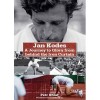
The following is an excerpt from the Jan Kodes book “A Journey To Glory From Behind The Iron Curtain” (for sale here: https://www.amazon.com/dp/0942257685/ref=cm_sw_r_tw_dp_4CGKK3K00WA7VQANB4CC) Kodes says that his title run in Barcelona may have been the best tennis he played in his life.

There were two more clay court tournaments to enter in the Fall – a very prestigious Spanish International Championship in Barcelona, and a tournament in Zaragoza that was prior to it.

KODES: I was not all that enthusiastic about the Zaragoza tournament; nevertheless, I arrived in the heart of Spain after six hours of puttering along on the train. I played the Yugoslav Nicola Spear in the semifinals. He was a clever player who knew how to play against me. Drop shot – lob, drop shot – lob! He made me grind my way through points by making me run all over the court and, if I finally approached the net, he either passed or lobbed me. Matches against him always cost me a lot of energy. In that particular semifinal match I kept telling myself: I mustn’t get too fatigued for Barcelona!

Kodes won the battle! The finals took place on Sunday morning at 10:00 in order to give the players enough time to transfer to Barcelona after the match. Kodes’ counterpart was a fearsome Australian, a left-hander Barry Phillips-Moore.

KODES: We played three out of five sets; I overcame him in four but only after a good battle: 4:6, 9:7, 9:7, and 6:3. The match stretched out and we hardly had time to make the express train to Barcelona that was leaving at 3pm. I threw my stuff in the bags, took a quick shower, the organizers shoved a gorgeous trophy in my arms and said: “Mr. Kodes, hurry up!” I dashed to the platform and a minute later the train rolled in… Throughout the train ride I studied the notes from my university lectures and by that evening we arrived in Barcelona.

I could not believe my eyes when I got off the train – there was a huge mob of people like on the Wenceslas Square in Prague during our Velvet Revolution! It was a Sunday evening and people were returning from their weekend travels! What chaos, yelling, scuffle for taxis! And there was I, adorned like a Christmas tree with racket bags, suitcases, and the trophy. In the end, I succeeded in getting into a taxi and made my way to the hotel.

The name of the hotel was Zenit and it was located very near the tennis courts. We all pretty much liked the hotel but it had one shortcoming – extremely soft sagging beds. Though soft beds were not uncommon in most parts of Western Europe the degree of softness in this hotel reached an acute rate. I preferred sleeping on firmer beds…

Luckily, the staff of the hotel were already familiar with me and as soon as I entered the lobby the receptionist shouted: “Ah, señor Kodes! Buenos dias! Tabla! Tabla para el señor Kodes!”

In no time two chaps hauled in a piece of plywood and followed me to the room. There they slid it under my mattress. There are times when you have no idea who your opponent might be. Generally, that is true about the first rounds. In my room I found a schedule of matches and when I scanned the draw I thought I was having a nightmare; first round – Spear! On Monday, Centre Court, at 11am! I hit the pillows but did not sleep well that night. I sensed that I had another agonizing battle ahead of me.

However, it all looked differently in the morning. Kodes started the match like a machine right from the beginning. No mistakes, uncompromising, whatever he touched found its proper deathly landing spot.

KODES: At 30:0 I tossed the ball for the first serve and I felt sharp pain penetrating my lumbar area; that forecasted worse things to come! I told myself: “You mustn’t let anybody recognize that you are in pain!”

As soon as your opponent senses that you are not your hundred percent he makes you suffer. I managed to finish the match successfully: 6:2 in the second set. When I entered the locker room I lay down on the massage table but I could hardly move. I felt the same I had experienced the previous year in Hamburg!

One of the local officials suggested to me: “See Dr. Mario Cabañes; he’ll help you.”

I shuffled my feet to Orantes and asked him: “Listen, they are sending me to some Dr. Cabañes; do you know him?”

“Yes, I do. He is our Davis Cup doctor and he is great; a real expert. He’ll look at you.”

One of the members of the organizational committee (coincidentally, that same man who is the main director of the entire Barcelona tournament today) put me in his car and drove me to the doctor’s villa.

An elderly gentleman greeted me: “Ah, señor Kodes; I know you from Davis Cup! A champion! Czechoslovakia!

He spread some ointment on my back, then he applied heat from a large lamp, maneuvered my back in various ways and, at the end, he gave me an injection. “It is nothing grave. Come again tomorrow. You must rest it; I’ll call and request a day off for you.”

The next day he gave me another rubdown and another injection but, on Wednesday, I had to go back to play. I had a formidable opponent – the French Francois Jauffret. I was worried about the match but it turned out well. The result was 10:8, 6:2! From that point on my confidence returned and I played like a machine again and sweep away Jaime Fillol and Andres Gimeno. I played really well at the net, and my serve and drop-shots were also successful. I won the Spanish Open Championship without losing even a set! Nastase suffered a semifinal defeat 9:7, 6:4, 6:1, and Orantes got ousted in the finals 6:3, 6:2, and 6:3! I disposed of both in front of a packed stadium.

My back gave me no problem what so ever; señor Cabanes had golden hands and I was very much obliged to him; Manolo Orantes had been right! I dare to say that I played, perhaps, the best tennis of my career in Barcelona in 1972! Zaragoza must have been a good preparation for what I displayed in Real Tennis Club Barcelona.

How To Play A Left-handed Player

February 12, 2015 by Admin

Hall of Famer Jan Kodes along with Czech author Petr Kolar have put together a tremendous volume of the history of Czech tennis in the book A JOURNEY TO GLORY FROM BEHIND THE IRON CURTAIN. The hard-cover coffee-table book, available here for $39 http://www.amazon.com/Jan-Kodes-Journey-Behind-Curtain/dp/0942257685/ref=sr_1_1?ie=UTF8&s=books&qid=1287408541&sr=1-1 discusses the life and career of Kodes, the 1975 Wimbledon champion, as well as the development of Czech tennis through the years.

In this book excerpt, Kodes discusses his conversation with left-handed Czech tennis legend Jaroslav Drobny prior hip semifinal match with British left-hander Roger Taylor during his run to the Wimbledon title in 1973.


Jaroslav Drobny was a left-hander who gained much experience while traveling around various tennis facilities of the world. It was no wonder that Jan Kodes approached him before his Wimbledon semifinal match against Taylor with a question: “Jaroslav, tell me, what bothered you the most when you faced a right-hander: when he served toward forehand into your body, or into the backhand out and away to the side? He hits a low sliced crosscourt backhand to my forehand volley, and that bothers me. I have no idea where he would hit a forehand shot.”

“Jan, remember one thing above all: you must hold a left-hander nice and tight, meaning that you keep on feeding the shots into his backhand because his reach is limited on that side. In order to make it look as casual as possible make sure that as soon as you know that you can put the ball away hit it into his forehand. That way he’ll feel that you are hitting indiscriminately into both sides” said Drobny. “In the toughest moments and situations, when you are pressed only to rally, you must always target the backhand side! It is less likely that he’ll hit a passing shot from that side. Lefthanders generally pass from a running forehand and they have a hard time to do the same from their backhand.”

KODES: This was yet another time when his advice was very helpful. There was just one more thing I needed. When somebody gives you advice you are still dealing only on the theoretical level. You must be able to turn it into practice – you must remember to do so in a match! I re- membered Jaroslav during the match with Taylor about three times. During a match one cannot concentrate only on one thing but rather it is necessary to evaluate and find weapons for all kinds of situations. However, when a match reached an important point I often bounced the ball several times before serving it and resolved: If he returns into my forehand, I’ll follow Jaroslav’s instructions. If he returns a low ball I’ll volley it crosscourt. I approached the net determined to carry out that decision without altering it! It did not matter how the opponent moved or did not move; I played what I had decided and waited for the reaction.

As soon as one decides to change the strategy while already on the run, invariably you botch it! Such are the laws of the game of tennis that apply twofold on grass surface. You don’treach advantage on your opponent’s serve, perhaps twice in a set. You either break your opponent’s serve or you don’t but you won’t have another chance to do so any time soon. On clay you will, on grass you won’t. It is in these very moments that a player must play with utmost concentration and according to those unwritten tennis rules. Even if I hit the ball out it does not bother me that much since I followed my plan; I get really unhappy if I botch a ball because I did not stick to my principles.

I had about five rackets with me in Wimbledon but I wanted to use only two of them during the finals. The leather grip was already thumbed and my fingers slid in comfortably, the string tension was just right, one slightly softer. However, I ran into a problem after the morning semi-finals. Two strings in one of the rackets started to roll. That posed a dilemma: should I ask to have it re-strung? Or should I just let it be? My rackets had been strung specifically for me in Prague and I was used to them. Naturally, they strung rackets in Wimbledon too, but each machine leaves a different touch, one is set to kilograms, the other to pounds and the pound-setting did not suit me well.

I approached Drobny and asked him to look at my racket. He took off his glasses, studied the strings for a while and then he said: “Play with it! Take the risk; I don’t think it will break. On clay it would not survive a set because clay is coarse but it should last through a match on grass.” And it lasted through the entire final match! 

Jaroslav Drobny
Jaroslav Drobny

The Only Player “From” Africa To Win A Wimbledon Singles Title

June 29, 2014 by Admin

By Randy Walker

@TennisPublisher


“I have a question for you” said the rough, Czech-accented voice of Ivan Lendl during a telephone news conference to promote his competing on the PowerShares Series tennis circuit. “Who is the only person to be a world ice hockey champion and a Wimbledon champion?”

The question was directed to Bill Simons of Inside Tennis Magazine in the waning minutes of the call with writers from around the United States.

“That’s a good question,” Simons responded. “I know Ellsworth Vines won ping‑pong and tennis.”

Being the promoter and moderator of this media call, I had an open phone line to speak when I wanted to all of the participants. Since I knew the answer to this trivia question, I chimed in.

“I think I might know the answer to that,” I interrupted. “Drobny?”

“Correct,” responded Lendl.

I remembered reading that Jaroslav Drobny was a standout hockey player in the former Czechoslovakia, the country where Lendl hailed from, during my readings and/or publishing of “The Bud Collins History of Tennis” or the Jan Kodes book of the history of Czech tennis called “A Journey To Glory From Behind The Iron Curtain.” It was a natural question for Lendl to ask, knowing that as a fellow Czech, Drobny was someone who he likely knew a lot about.

“What do I get?” I then joked with Lendl, proud of my correct answer, in a very public forum of a telephone news conference.

“Another question,” dead-panned Lendl in the deliberate voice everyone in tennis is accustomed to. “Who is the only person with an African passport to win a Wimbledon singles title?”

It was a great trick question, but I also knew the answer. It was the same as the first question.

“Drobny!” I answered.

“Correct again,” said Lendl.

“Well, I am the publisher of the Bud Collins History of Tennis,” I reminded Lendl.

“That would be why,” he said.

Collins in “The Bud Collins History of Tennis” wrote that Drobny had “a remarkable two-sport world class athlete: Hockey in winter, tennis the rest of the time. So good was Drob as a forward on the ice that he played a leading role in Czechoslovakia’s winning the world amateur championship in 1947 (he scored three goals in the final game against the U.S.), and gaining sil­ver at the 1948 Olympics. By 1949, though, tennis had become his life.” In 1949, Drobny defected from communist Czechoslovakia with Davis Cup teammate Vladimir Cernik during a Swiss tourna­ment at Gstaad. Egypt offered him a passport so he could continue to travel and play on the international tennis circuit.

Jan Kodes, the 1973 Wimbledon champion from Czechoslovakia, wrote in his “Jan Kodes: A Journey To Glory From Behind The Iron Curtain” book of Drobny, “He was an amazing player who won an unbelievable 133 tournaments and who was inducted into the International Hall of Fame in 1983 with many distinctions.” Drobny won the singles title at the French Championships in 1951 and 1952, but his greatest triumph came at Wimbledon in 1954.

Wrote Collins in his book of Drobny’s win at Wimbledon in 1954, “Drobny at 34 still had a punishing serve, though not as oppressive as it had been prior to a shoulder injury. He was seeded only No. 11 in his 11th appearance at Wimbledon, but upset No. 2-seed Lew Hoad in the quarterfinal, 6-4, 6-3, 6-3, and beat old rival Budge Patty in the semifinals, 6-2, 6-4, 4-6, 9-7. Ken Rosewall overturned top-seeded Tony Trabert in their semifinal, 3-6, 6-3, 4-6, 6-1, 6-1, but couldn’t get past Drobny in the final, 13-11, 4-6, 6-2, 9-7, in two hours, 37 minutes. Drob became only the second left-handed champion, following Norman Brookes in 1907. No one could have imagined that Rosewall, in the final for the first of four times at age 19, would never win the singles title he coveted most. The galleries loved Drobny, the expansive Czech refugee in dark prescription glasses. “No better final had been seen since Crawford and Vines 21 years before,” judged Lance Tingay. “The warmth of Drobny’s reception as champion could not have been greater had he been a genial Englishman. In a sense he was, for he had married an Englishwoman and lives in Sussex.”

Drobny’s final win over Rosewall lasted in 2 hours, 37 min­utes, making it the longest Wimbledon final at that time. Wrote Collins, “Drob was the Big W’s remotest-chance success then, although non-seeds Boris Becker (1985), Richard Krajicek (1996), Goran Ivanisevic (2001), 11th seed Pat Cash (1987) and 12th seed Andre Agassi (1992) were to join his long-shot club.” His win also gave him the distinction of being the first Czech-born player to win a Wimbledon singles title. Drobny became a British citizen in 1959, and lived in London until his death in 2001. He was inducted into the International Tennis Hall of Fame in 1983.

To pre-order the soon-to-be-updated and re-released edition of the “Bud Collins History of Tennis” click here: http://www.amazon.com/dp/1937559386/ref=cm_sw_r_tw_dp_oceStb0CA3ZHE8R6

To order the Kodes book about the history of Czech Tennis, “A Journey To Glory From Behind The Iron Curtain” click here: http://www.amazon.com/dp/0942257685/ref=cm_sw_r_tw_dp_MbeStb1HH130DNA2

Jaroslav Drobny
Jaroslav Drobny

Preparing For The Wimbledon Final 40 Years Ago… Aspirin, An Earful of Cotton and Panic To Find A Practice Partner

July 2, 2013 by Admin

By Randy Walker

@TennisPublisher


Forty years ago this Sunday, on July 7, 1973, Jan Kodes was the last Czech man to win the men’s singles title at Wimbledon, a distinction that Tomas Berdych would like to take away from the Hall of Famer from Prague.

The 1973 Wimbledon championships is perhaps more known for the 82 men’s players who boycotted the event in support of Yugoslav player Nikki Pilic’s suspension by his federation. But Kodes was able to navigate through a draw that featured such standouts as Bjorn Borg, Jimmy Connors, Ilie Nastase among others. In the semifinals, he won a dramatic 89 97 57 64 75 match against Britain’s Roger Taylor where the match was delayed by rain with Kodes serving down 4-5 in the fifth set. In the final, Kodes defeated Alex Metreveli of the Soviet Union 61 98 63.

Kodes discusses his unique preparation for the Wimbledon final in his book JOURNEY TO GLORY FROM BEHIND THE IRON CURTAIN (New Chapter Press, available at www.NewChapterMedia.com) that included a last-minute panic just before playing the biggest match of his life, as explained in this exclusive book excerpt.

Realization descended on me the next day. I grasped what was ahead of me. The finals of the most prestigious tournament in the world! Playing the finals of any tournament of consequence is still very different from playing the Wimbledon finals. Metreveli made it known that he would have preferred meeting Taylor in the finals.

Many players prompted me: “Please, don’t let the Russian win! That hasn’t happened here yet!” I went to lunch and heard again: “I hope you won’t let the Russian win!” I arrived for practice and a Polish Englishman, an emigrant Mr. Spychala, who was in charge of scheduling play on practice courts and passing out balls, said: ‘Jan, tomorrow I’ll be rooting for you; you won’t let a Russian win, will you?” I had to listen to this all day long! I would have preferred playing against Newcombe or Smith. That would have been a real spectacle!

And then it struck me: “What do they say at home? In Prague? The 1968 invasion of Czechoslovakia was still a fresh wound in everyone’s mind. The entire nation is following this development! What if I lose? People will say: Naturally, they ordered him to lose, he had to let him win. It is the same as with the hockey team! ”

Such was my way of thinking that Friday, a day before the most significant final match of my life. I contemplated all odds, I practiced just 30 minutes and rested; I had a massage and tried to nurse my messed up ankle

The evening before my final match they showed clips on television from the matches played in the last few days. There was Metreveli defeating Jimmy Connors and Alex Mayer, the winner over the Rumanian Nastase, and then they showed my match against Taylor. In the train of the clips Jack Kramer and Fred Perry made their commentaries. They talked with Dan Maskell, a former Davis Cup player in the era of our Kozeluh and afterwards a Wimbledon commentator for many years: “It is the first time in the history of this championship that two players from communist countries face off in the finals. Who will prevail?”

“If I were to put money down on anybody it would be Kodes,” said Fred Perry. “Why? Because he won Paris twice and he reached the finals on grass at Forest Hills. Metreveli will be nervous, he does not have much experience dealing with the pressures of a final match.”

“I was Kodes’ commentator in 1971 at Forest Hills, where he defeated Newcombe and Ashe,” said Jack Kramer. “He has a dangerous serve return and his game on grass improved tremendously. He is a more complete tennis player now, after winning Roland Garros twice and he showed against Taylor that his serve is adequate.”

These comments made me feel very good. I persuaded myself that if experts say that I am better, it must be so. I went to bed around 10:30 pm. I called the reception and asked not to forward any calls to me since I did not want to be disturbed in the middle of the night or early in the morning. I put cotton wool in my ears and took half of an aspirin to warm my body through. I did all that in order to have a good rest before the finals. In the morning the receptionist woke me up as I had requested and within a minute I had

four phone calls! My friend, Franta Novak, told me: “I could not get hold of you!” Others asked: “What is going on with you? It is impossible to reach you!” I only blessed my fantastic foresight that I might get disturbed by phone calls. In real terms I found myself fitting a true “professional” with all that it entailed.

On the way to Wimbledon I realized that I had not asked anybody to warm me up. But it didn’t disconcert me. Just making my way to the court struggling through the crowds will tire me out! Well, I’ll have a massage done and warm up in the locker room. Inwardly I decided that I did not need the on-the-court warm up.

Upon my arrival I spotted Metreveli warming up on court number two! I panicked and was overwhelmed with a feeling that I should, indeed, warm up a little. I looked around and found no players in sight; they have already left. Damn it, who shall I hit with? At that moment the veterans finished some doubles and they came to the locker room all sweaty and tired out, among them Vic Seixas, a 1953 Wimbledon champion, By the way, Vic was one of the first individuals who came to me after the match with Taylor and told me how unfair was the suspension of play at 4:5; he did not remember anything of the sort ever taking place at Wimbledon before.

I approached him: “Vic, I am due to go on the court to play the finals in a few minutes but I have nobody to warm up with. I am a bit nervous and need just a few minutes to hit the balls back and forth. Would you pop up a few balls for me? Fifteen minutes, no more than that.”

“You don’t think that I could warm you up? I can’t take that responsibility.” He knew what it entailed to be in the finals and he was afraid he could not warm me up sufficiently.

“Vic, only a few minutes; you’ll serve, I’ll return in order to get the rhythm going!”

“But Jan, how can I warm you up?”

“Come on, we are both changed to play…”

I talked him into it, picked up balls and we went to court number two. I started a rally but he was unable to respond successfully. Poor guy was more nervous than I was! I needed only a few hits, a return, some serves, a few volleys, just to get the timing going.

We spent about twenty minutes on the court and as we were returning to the locker room he said: “I know this did not give you much but I hope that it helped you and you’ll win the first set.”

I took a shower, light massage and off I went to the Centre Court.

I was immensely grateful to Vic for those twenty minutes of warm up. He knew very well the meaning of what he said when he wished me good luck in the first set. On grass, success at the beginning of the match is terribly important. If I start the match off well, my opponent will “miss the train.” And that is exactly what happened!

I won the first set 61.


Jan Kodes
Jan Kodes

Wimbledon Boycott 40 Years Later… Champion Jan Kodes Looks Back

June 14, 2013 by Admin

The 2013 Wimbledon Championships marks the anniversary of a dubious event in the tournament’s history.

It was 40 years ago in 1973 that 81 men’s players voted to boycott the tournament as a protest against the tournament’s decision to upon a suspension imposed upon him by the Yugoslav Tennis Association to refusing to compete in a Davis Cup match.

The men’s singles champion that year was Czechoslovakia’s Jan Kodes, who was already a two-time French Open champion and a singles finalist at the U.S. Open in 1971 (and later that summer).

Kodes discusses the Wimbledon boycott in his book written with Peter Kolar about the history of Czech tennis A JOURNEY TO GLORY FROM BEHIND THE IRON CURTAIN, available here: http://www.amazon.com/Jan-Kodes-Journey-Behind-Curtain/dp/0942257685/ref=sr_1_1?ie=UTF8&qid=1371228538&sr=8-1&keywords=Jan+Kodes and excerpted below.


A week before Wimbledon a scandal with Pilic broke out in full force. It was a culmination of the world tennis organization’s crisis, which had been lingering for some time. Since 1968, when gates of world tennis tournaments were opened also to professional players, the International Tennis Federation (ITF) faced problems with unions representing the interests of the players. The strongest dispute fl ared up in the middle of 1973. Seeded Yugoslavia lost a Davis Cup match to New Zealand at Zagreb and Nikki Pilic, who refused to compete was fined by the Yugoslav Tennis Association with a nine months long play suspension penalty, which was announced at the French Open. Pilic appealed the decision and ITF lowered the penalty to one month, however Wimbledon took place during that month. The ATP board of directors than said that they had not alternative but to carry out their threat of a boycott unless Wimbledon allowed Pilic to compete. The independent Wimbledon All England Lawn Tennis Club stood by ITF decision, denied Pilic the entry and the ATP threatened to boycott.

KODES: It is my opinion that majority of players considered the issue as pointless thinking “who cares about Pilic and the Yugoslav Tennis Association?” The ATP inflated the controversy further and one week before Wimbledon, during the Queen’s Club tournament, the feud reached a boiling point. Jack Kramer and Donald Dell represented the players and threatened the ITF and the governing body of the All England Club with a boycott of over seventy players. Nevertheless, the organizers held their ground.

Many people felt that the situation could have been saved. If it was a battle for the control of the game, it was also a battle in which both the contending sides shared great many common interests. Wimbledon, as the most prestigious tournament in history, and the All England Lawn Tennis Club as its organizer, held tremendous influence over the course of world tennis. They hoped that members of ATP would support the tournament, but if they decided against that, the Championships would still go on. However, the ATP, against a mounting wave of criticism, decided to continue the boycott. Later the crowd was the second biggest in the Championships history, and the British triumphantly made the best of a bad job.

The original list of seeded players was as follows: Stan Smith, Ilie Nastase, John Newcombe, Arthur Ashe, Ken Rosewall, Tom Okker, Marty Riessen, Roy Emerson, Tom Gorman, Cliff Richey, Adriano Panatta, Manolo Orantes, John Alexander, Bob Lutz, Jan Kodes and Roger Taylor.

KODES: When this issue was under scrutiny during the week before Wimbledon began ATP representatives inquired among all players whether they would or would not play. I was not an ATP member and neither were Nastase, Metreveli, Borg or Connors. At that time the ATP was still in diapers – a motley organization that needed time to solidify. I do not know if players, who refused to play, later regretted their decision but it is obvious that the ATP with its actions impressed the international functionary body for the times to come. Even today, when something pops-up in tennis world, they are still able to pull out Pilic scandal with a threatening tone. It became a precedent for dealing with player frictions.

I was surprised that even some professionals turned down playing Wimbledon that year in spite of the fact that they weren’t ATP members. For instance Rosewall, an older player then, and three times a finalist; I do not understand till today who managed to influence him so much that he refused to play. But, according to the Grand Prix point standings out of top 15 just prior the tournament were Newcombe, Smith, Pilic, Panatta, Okker, Gorman and Orantes, who supported the boycott.

When it was definite that an agreement would not be reached the organizers had to alter the seeding to eight players only: Nastase, Kodes, Taylor, Metreveli, Connors, Borg, Davidson, Fassbender.

KODES: I did not get emotionally involved in the turmoil of the issue and until the draw was made public I did not know who was in nor who was out. The remaining players were still strong and there were some excellent grass court specialists, particularly the Indians. I was convinced that I should not choose not to boycott Wimbledon! Nastase thought similarly, Taylor was told that unless he shows up on the court the British would expel him from the club. They put it to him straight and plainly. For the Americans it was simple: “We, ATP members, can pick and choose tournaments we want to enter.”

The controversy lingered in my mind: “Newcombe is not playing and that is his decision. I defeated him on grass already at Forest Hills and in Rome on clay. Rosewall, who I beat three months previously in Vancouver, will not play. In the last couple of years I did beat Ashe and also on grass. I overcame Laver in Stockholm, Okker and Riessen on the WCT indoor circuit. Why should I not beat them also in Wimbledon?” Laver chose not to enter regardless the boycott. And Smith? I could beat him last year, why not this year. I considered that Wimbledon as any other tournament. There was nothing else I could do.

Yet, many people asked me: “So, how many players actually entered it?” I answered: “As usual – 128! The same as any other Grand Slam tournament.”

Jan Kodes had to win seven matches, all in three out of five sets, before he could raise the Wimbledon Trophy above his head. Those matches were far from easy. He could not take a rest in between side changeovers sitting down because there were no chairs. Wimbledon chairs appeared the following year in 1974!

The London spectators were wonderful! In spite of the absence of the biggest stars they supported “their” tournament spontaneously and came in record numbers almost daily. When Nastase entered the centre court to play the opening match as a number one seed the audience welcomed him with standing ovation. They repeated the same when their own favorite, Roger Taylor, came out to play. It was a common belief that the final match would be between these two players. But, there was still Jan Kodes….

KODES: I was seeded as number two. That gave me plenty of responsibility to deliver a fine performance. The previous year I reached the semifinals and I contemplated that I could reach that far again?! I experienced something similar in Paris, when I won, and in subsequent years I was seeded as number one.


A JOURNEY TO GLORY FROM BEHIND THE IRON CURTAIN is a coffee table book, originally published in Czech, that provides a narrative and illustrated history of Czech tennis through the eyes of Kodes and author Peter Kolar. The book, filled with hundreds of unique and personal photographs, documents the successful journey of Kodes from political turmoil of the Cold War to international tennis fame, detailing the early days of darkness and family persecution in communist Czechoslovakia and the complexities of becoming a professional tennis player under a totalitarian regime. Entertaining anecdotes featuring Czech tennis legends Ivan Lendl and Martina Navratilova are also featured as well as the stories behind Kodes’ victories at Wimbledon and the French Open and his two runner-up finishes at the U.S. Open.

Jan Kodes
Jan Kodes

Jan Kodes Looks Back At The Last And Only Time The Czechs Won The Davis Cup

November 16, 2012 by Admin

By Jan Kodes


The following is a book excerpt from A JOURNEY TO GLORY FROM BEHIND THE IRON CURTAIN, a one-of-a-kind coffee table book that documents the history of tennis in the Czech Republic. The book features an incredible array of historic and never seen before photos and many anecdotes and stories about Czech players including Martina Navratilova, Ivan Lendl and many others. It is available for 24 percent off here:  http://www.amazon.com/Jan-Kodes-Journey-Behind-Curtain/dp/0942257685/ref=sr_1_1?s=books&ie=UTF8&qid=1320242085&sr=1-1  The book was written by Jan Kodes, the 1973 Wimbledon champion, 1970-71 French Open champion and the 1971 and 1973 US Open singles runner-up. He was a member of the only Czech team to win the Davis Cup back in 1980 and the member of the 1975 team that lost to Sweden in the final. Peter Kolar co-wrote the book with Kodes. The Czechs are hosting Spain in the 2012 Davis Cup final in Prague this weekend. 


JAN KODES: A JOURNEY TO GLORY FROM BEHIND THE IRON CURTAIN

Prague was overwhelmed by tennis euphoria. The famous “Cup” was exhibited in a department store Kotva on Republic Square. There were a hundred thousand applications for tickets. The Sport Hall capacity of fourteen thousand was lowered by two thousand for security purposes. The Italians received two thousand tickets. Many official guests arrived in Prague, including the ITF President Philippe Chatrier. A supreme surface was laid down for the tennis court. As is typical for our Czech character there were many voices for and many against the surface. Jan Kodes soothed the debate: “Many tournaments are played on supreme carpet yet each surface is unique. In some places the balls bounce faster, in others slower. Here the bounce will be a bit lower. However, it remains within the margin of players’ adaptability. If the surface triggers a handicap for the players it will be the same for both teams.”


KODES: At any rate, the surface was quite fast which suited us well. On the contrary, it did not suit the Italians. We all carried in our heads the memory of our defeat in Rome in 1979, when Ivan received a double “bagel” from Panatta. But in Prague, this was a different Lendl! Furthermore, we were going to play inside, on the supreme… and Ivan had prepared well to play his best tennis in the final. Besides his new coach Wojtek Fibak, Ivan also arrived with his manager Jerry Solomon, from the sports agency ProServ.

Tomas Smid’s health failed him the night of Thursday to Friday. He suffered from wicked nasty diarrhea. Tomas’ wife called me up around midnight: “Jan, I have no idea what more I can do for Tomas. He is dreadfully sick!” I called Dr. Kopriva at once. In the morning Tomas headed to Dr. Rybin’s in the Army hospital. They didn’t know what to think of it and thought of pumping out his stomach. Most likely, the source of the food poisoning was a fish fillet that he had eaten.

In the course of the morning they thought of placing me in Tomas’ stead in case that he was incapacitated. It did not frighten me since my record against Panatta was reasonably good. Around eleven Smid arrived at last and without any warm up proclaimed that he was ready to play. I was not aware that anybody knew what exactly had happened to him; he looked unbelievably debilitated. That added to the reason why one had to appreciate his performance that much more. He put everything he had into that match and won 3:6, 3:6, 6:4, 6:4, and 6:4.

I suspect that Adriano Panatta underestimated the development of the match when he was leading two sets to love. Tomas was a “holder.” It was a battle of serves. Tomas played the serve and volley game well, but so did Panatta. Panatta started out very well and did not leave any room for further improvement, whereas Tomas started out so-so and gradually improved his game. Step by step they reversed roles and, at the end, Smid was in charge. He also showed a stronger heart. Tomas was always able to deliver. Considering the variety of shots he possessed he definitely made the best of his arsenal. And since he played serve and volley effectively he chose that as his strategy against Panatta: serve – approach – volley to Panatta’s backhand. A passing shot from the backhand side was Panatta’s weakness. The match was played in a tense atmosphere, mainly due to the Italian contingent in the audience. One of the drunken fans shouted at the officials, and was subsequently removed from the arena.  The Italians then removed themselves from the court as well and refused to continue play until the drunken fan was allowed to return! In the end, the fan turned out to be a leader of the Italian Communist party and all charges against him were dropped. Antonin Bubenik, the umpire, tried to calm the unruly mob to no avail. His words “Silenzio prego! Silenzio prego!” drowned in the noise.

The mania reached its climax during the decisive set. Tomas Smid valiantly ran down his opponent’s drop shot but the Italians claimed it took a double bounce. Referee Hardwick awarded the point to the host team but the Italians protested the call and left for the locker rooms. When they returned to the court the “tug-of-war” continued. Tennis fans, who watched the television broadcast of the match, may remember the moment when Adriano Panatta verbally assaulted the chair umpire Bubenik after an objectionable call. From the television screen it was easy to recognize the abusive English language verbal tirade with which Panatta regaled one of our best umpires: “You are a big Czech pig!”


In the second match Lendl lost the first set to Barazzuti 4:6, but the next three sets were an unambiguous winning venture for him: 6:1, 6:1, 6:2. The captain of the Italian team, Vittorio Crotta: “It is very likely that the end result has been decided… There were too many questionable calls and Smid’s foot faults remained unobserved in Panatta’s match. Under no circumstances do I want to presume that the lead of the Czech team was affected by the disputed calls.”

The Italians kept protesting Tomas’ uncalled foot faults. It is true that at home the players test the boundaries because they rely on the home advantage of line calls. We went through the same treatment in Australia, Russia, and Italy. Keeping in mind Ivan Lendl’s excellent performance the Davis Cup team leadership stuck to their principle of “not changing the winning line-up” and put Lendl in Saturday doubles team with Smid. Panatta and Bertolucci were well known to be an excellent team and they displayed their confidence to everybody around them. Particularly Bertolucci was brilliant, his returns were low and precise, and he reigned at the net with outstanding volleys and overheads that he played with exceptional lightness. He also demonstrated incredibly good hands and touch for the ball.

The host team started out in “Smid-like” spirit of his opening singles match – lifeless. They gave an impression of being out of fuel, without energy to give them the necessary spark to ignite a real doubles “concert.” They were unable to put away the decisive shots. Fortunately for us, Panatta did not compliment Bertolucci’s phenomenal effort and with his double fault he gave us the second set. However, our team’s performance did not improve even at that tied score. At moments it seemed like there were two singles players on the court playing a game of doubles. There was little teamwork on the Czech side of the court. After a break at 3:6, 6:3, 3:6 specifically Lendl’s performance improved. Smid then got into the game too and that resulted in the fourth set victory 6:3.

A longstanding dream came true at last for generations of Czech tennis enthusiasts when Ivan Lendl secured the match at 5:4 in the fifth set with his clean effective game! For the first time in history they conquered the Davis Cup!


KODES: The doubles game was a nervous performance of ups and downs. However, the important thing was that, in the end, the guys won in five! The final victory was not secured even when we were 2:0 ahead. Who knows how the matches would have turned out the third day of competition if the score had been only 2:1 after the doubles! Maybe Smid would have lost to Barazzutti and then the match between Lendl and Panatta would have been the decisive one at 2:2… I am sure that would not have been an easy task. Panatta would then have played bang-bang without the pressure and responsibility of having to secure a point; that would make him feel more at ease playing Ivan. So, the doubles was crucial and it was wonderful that the score was 3:0 in our favor at its conclusion. Smid later lost to Barazzutti 6:3, 3:6, 2:6 which only points out that, most likely, he would have lost to him at 2:1 as well.


Nothing will ever take away the advantage of the home turf… The outcome of the match was decided; the third day matches were played only as the best of three. First, Smid lost to Barazzutti when he did not put out much effort in the last two sets. Nobody reproached him because he was very fatigued; he was still celebrated like a hero. Gianni Ocleppo played the last match instead of Panatta; Ivan Lendl beat him convincingly 6:3, 6:3.

The Italians could not withstand the weight of defeat and they left the venue immediately following the last match. After half an hour of waiting for them the closing ceremony proceeded with only a fragment of the Italian team in attendance – the non-playing captain and the substitute player Ocleppo, and our triumphant team. The ITF president, Philippe Chatrier, then handed over the famous “salad bowl” to Antonin Bolardt and said: “On behalf of myself and fifty four participants in this year’s competition I am passing the Davis Cup bowl to the team of Czechoslovakia. It is a grand and well deserved victory that was achieved over such a talented and experienced Italian team that won this most famous trophy in 1976. I congratulate your captain and your team, especially then the formidable players Ivan Lendl and Tomas Smid. Your team with such young outstanding players will be hard to beat in the near future.”


KODES: What more could we have wished for than playing Italy at home after we passed over Argentina playing their best team of Vilas–Clerc on their home turf? And we really won that final. History is not interested in what happened in the background, did Smid have health problems or did he not, did the umpire make the right decisions or did he make bad calls? It is not relevant; we had a chance and we grabbed it; we went for it! The same opportunity opened up in Stockholm in 1975. It was then the Swedes’ historic chance. They played at home, in Stockholm, against Czechoslovakia! We beat the Australians for them and they now had a chance to be the overall winners; they grabbed that opportunity, just like we would a few years later in Prague. When you play the Davis Cup finals on home turf you must not waver. We didn’t hold back and thus we triumphed at least once! I trust we’ll remember Prague in 1980 for a long time because the next victory is not coming any time soon.  For me, personally, it was something totally fantastic because I had wished very much to win the Davis Cup and I was with the team for great many years; practically seventeen years – from 1964 to 1980! We did not triumph in Stockholm but we accomplished it in Prague… Even though I did not play, I was a member of the team and it tickles me that I lived to experience it. I always gave my maximum in my efforts to conquer the “salad bowl” and bring it home. That was my dream!

Representing your country in Davis Cup is the utmost privilege. The selected team cooperates and deals with pitfalls and traps. It is a lingering competition and players have to time their performance accordingly. For instance, I was in great shape after the grueling ten day advance and winning the French Open.

In the final match against Italy we had to deal with Smid’s indisposition caused by intestinal problems from food poisoning, in Romania we had to play without him altogether due to his ankle injury. Yet, the team achieved the goal – that is our historic triumph. I knew it was going to be difficult and dramatic… the Italians were upset before it even started and they tried to find excuses. At the tournament in Bologna they were already saying that there was no way they could win in Prague. That weakened them!

I have always admired Bjorn Borg, who won Wimbledon five times and always engaged himself again and again with the same resolve, same desire and vehemence. That I call athletic grandeur! I played Davis Cup for seventeen years and somewhere, deep in my soul, I believed that one day we would succeed in winning the “salad bowl.” The moment it actually happened, all the difficult moments we had along the way flashed in front of me; the chances when everything could have turned against us, the instances when we felt defeat frigidly near. Just recalling the final itself – what if Tomas did not beat Panatta? What if Ivan failed to muster better mental strength in the close of the doubles game than this formidable Italian player? Who knows? It was our willpower and strength to give out everything we had that was our strongest weapon over our opponent; in the end, it gave us with the most fantastic feeling – the Davis Cup triumph


Jan Kodes: Czechs Have 50-50 Chance To Win Davis Cup Against Spain

November 14, 2012 by Admin

By Jan Kodes


Jan Kodes of the Czech Republic, the 1973 Wimbledon champion, 1970-71 French Open champion and the 1971 and 1973 US Open singles runner-up, is the author of the book A JOURNEY TO GLORY FROM BEHIND THE IRON CURTAIN, a one-of-a-kind coffee table book that documents the history of tennis in the Czech Republic. The book features an incredible array of historic and never seen before photos and many anecdotes and stories about Czech players including Martina Navratilova, Ivan Lendl and many others. It is available for 24 percent off here:  http://www.amazon.com/Jan-Kodes-Journey-Behind-Curtain/dp/0942257685/ref=sr_1_1?s=books&ie=UTF8&qid=1320242085&sr=1-1  Kodes was a member of the only Czech team to win the Davis Cup back in 1980. He also lead the Czechs to its first appearance in the Davis Cup final in 1975.


The up-coming Spain vs. Czech Republic Davis Cup final this weekend in Prague should be a heavy test for Czech players Tomas Berdych and Radek Stepanek.

The team has selected a fast indoor surface in its attempt to win the Davis Cup trophy for the first time since 1980 and for only the second time in history. Back in 1980, at the indoor ice hockey stadium on a rubber carpet supreme court, the Czech team won the Davis Cup for the first time, 4-1 over Italy. That Czech team was made up of Ivan Lendl, Tomas Smid, Pavel Slozil and myself.

The Spaniards have arrived in Prague without Rafael Nadal and therefore I rate the chances of the Czechs of winning the Cup at 50-50. This is the fourth Davis Cup final for the Czech team. We lost to Sweden on a fast indoor court in Stockholm by a 3-2 margin, where I lost to Bjorn Borg in the match that clinched the win for Sweden. In 1980, the Czech team beat Italy 4-1 where Lendl powered our team to victory and Smid beat Adriano Panatta in five sets in the opening match. In 2009, Tomas Berdych and the Czech team were beaten 5-0 by Spain on clay in Barcelona.

Who will win this time? The Spanish doubles team of Marcel Granollers and Marc Lopez just won the ATP World Tour Finals in London!  David Ferrer has had a great season winning seven ATP singles titles and Nicolas Almagro, who reached top 10 this year, likely playing in the second singles position. For sure this will be an open tie and the Czechs must believe in Berdych to win both of his singles matches. Radek Stepanek, the Czech big fighter star, might surprise on the opening day. Can he beat Ferrer? This could be a key match too!

Both Czech players had to play all three days so far during their run, but they were also a little lucky. Against Serbia in quarterfinals, Novak Djokovic did not show up and with Argentina in Buenos Aires in the semifinals, Juan Martin Del Potro give up the tie after winning his opening match.

The Czechs have a strong chance to win at home and must take it just like the Czech women did in winning the Fed Cup also in Prague. The Czechs have had many several solid performances in getting to the final and are deserving of being Davis Cup champions. However, they have to play great tennis for one more weekend!


Jan Kodes with Tomas Berdych

Jan Kodes: Will We See A New US Open Champion?

September 7, 2012 by Admin

By Jan Kodes

Jan Kodes of the Czech Republic, the 1973 Wimbledon champion, 1970-71 French Open champion and the 1971 and 1973 US Open singles runner-up, is the author of the book A JOURNEY TO GLORY FROM BEHIND THE IRON CURTAIN, a one-of-a-kind coffee table book that documents the history of tennis in the Czech Republic. The book features an incredible array of historic and never seen before photos and many anecdotes and stories about Czech players including Martina Navratilova, Ivan Lendl and many others. It is available for 24 percent off here:  http://www.amazon.com/Jan-Kodes-Journey-Behind-Curtain/dp/0942257685/ref=sr_1_1?s=books&ie=UTF8&qid=1320242085&sr=1-1


Tomas Berdych and Andy Murray will play an interesting US Open semifinal match on Saturday – each player very eager to try and get to the final to play for their first major singles title. This should be extremely good battle!

The game of Berdych, my countryman, has improved from earlier this year and his first serve worked very well against Roger Federer in his quarterfinal upset of the No. 1 seed. Berdych’s confidence is high. Federer did not show his best at all, but you play as well as your opponent lets you play and Berdych did not give him much. He overpowered him and hit his groundstrokes with full power most of the time.

Murray has improved too this year and is much more confident after winning the gold medal at the Olympics. He is moving very well and he is fighting very well even when he is down, which was the style of his coach Ivan Lendl. Murray is different person now than before the Olympics and he is the favorite against Berdych.

In some ways, Berdych’s battle with Murray should be much more difficult compared to the quarterfinal with Federer. Both players know well that the semifinal and final back to back – Saturday and Sunday – is an incredible physical and mental task. A key to winning the title will be who has a tougher match in the semifinals and who plays in the first semifinal and has more time to recover for the final. It is interesting to note that Novak Djokovic, who plays David Ferrer in the other semifinal, has had a much easier run to the semifinals. He has not lost a set and only lost 32 games en route.

Berdych will also be the key man for the Czech Davis Cup team who play against Argentina in the semifinals in Buenos Aires next week on clay! This must be psychologically hard on Tomas now too, but I am sure that this weekend at the US Open will mean much more for him. For him to win both events in this time would fulfill his grandest dreams!


Tomas Berdych
Tomas Berdych

Jan Kodes: Rafa-Beater Rosol Emerging From The Shadows

June 29, 2012 by Admin

By Jan Kodes

It was unbelievable to see my fellow Czech Lukas Rosol beat Rafael Nadal in the second round Wimbledon. I did think he had it in him to win a match like this – and he finally did it!

Lukas is a very dangerous player for anybody to play with his hard-hitting serve and groundstrokes and his good physical abilities. He is not afraid of anybody – as was showcased against Rafa – and he always plays with his hard-hitting, aggressive game. His confidence has grown immensely the last two years, but he was still consistently losing matches because of his risky style of play. He can still reach a much higher ranking (he is ranked No. 100 right now) and this win will help a lot.

I am very happy for him since he has always been in the shadow of Tomas Berdych in the Czech Republic. In my opinion, he should play at No. 2 singles in Davis Cup already for the last two years, but the Czech Tennis Federation did not support him and believed more in Radek Stepanek and his experience. I hope this will change too soon.

Rosol
Rosol

Lukas is from Prerov (Moravia) but he has been practicing more in Prague lately at our club. He likes to receive advice from people and I saw him and spoke to him just before he left for Wimbledon. His coach is Ctislav Dosedel, a former good Czech pro player based on Prerov. Lukas is 26 years old and the same age as Tomas Berdych, but he could not break through earlier in his career like Tomas did. He did have a good win last year at the French Open, beating Jurgen Melzer of Austria, who was seeded.

Against Rafa, Lukas did everything right. No long rallies and exchanges – he just overpowered Rafa totally. He showed no respect for Rafa on the court and there was not much that Rafa could do.

Lukas served hard and went for winners immediately – this worked well and Rafa was late with his defense. We saw some great drop shots too – which worked very well because Rafa was too far behind the baseline.

With this performance, Lukas can beat anybody – especially when his serve goes in! This is grass and, as you can see, the grass can still be fast if you play the right way and you are not afraid to go for it! It’s also important to go to the net to hit winning volleys like Adriano Pannata did on clay against Bjorn Borg when he beat him en route to winning Roland Garros back in 1976.

I am not sure if Rafa was well-prepared for this match and if he knew much about Lukas’ game, because he did not read his game too well, especially the serve. Rafa was often late on his returns and his percentage was too low. Lukas often started his service games by serving to Rafa’s backhand to take him out of the court!

Nadal was shaken at the start of the fifth set when he lost his serve in the first game. That should not have happened to him. Sometimes, one break is a key, especially in the final set.

I wish more players would play the game that Lukas Rosol played against Rafa. Will this be something that we will see more of? We shall see…

Jan Kodes of the Czech Republic, the 1973 Wimbledon champion and 1970-71 French Open champion, is the author of the book A JOURNEY TO GLORY FROM BEHIND THE IRON CURTAIN, a one-of-a-kind coffee table book that documents the history of tennis in the Czech Republic. The book features an incredible array of historic and never seen before photos and many anecdotes and stories about Czech players including Martina Navratilova, Ivan Lendl and many others. It is available for purchase here: http://www.amazon.com/Jan-Kodes-Journey-Behind-Curtain/dp/0942257685/ref=sr_1_1?s=books&ie=UTF8&qid=1320242085&sr=1-1)


Jan Kodes: pace of play and court surfaces must change

May 31, 2012 by WTM

Jan Kodes of the Czech Republic, the 1973 Wimbledon champion and 1970-71 French Open champion, is the author of the new book A JOURNEY TO GLORY FROM BEHIND THE IRON CURTAIN, a one-of-a-kind coffee table book that documents the history of tennis in the Czech Republic. The book features an incredible array of historic and never seen before photos and many anecdotes and stories about Czech players including Martina Navratilova, Ivan Lendl and many others. It is available for 24 percent off here: http://www.amazon.com/Jan-Kodes-Journey-Behind-Curtain/dp/0942257685/ref=sr_1_1?s=books&ie=UTF8&qid=1320242085&sr=1-1)

***

There has been so much talk this year about the pace of play in pro tennis that I would like to speak a bit about the subject. A few years ago, the International Tennis Federation (ITF) met with the ATP Tour to work to slow down the game. They wanted slower surfaces and slower balls. In my opinion, this was a big mistake to do both as it is seen today. They went from one extreme to the other. Before, it was too fast and now it is too slow! I think the balls should be like they were before as there are so many shoulder injuries in pro tennis these days.

Matches are also so long because the players are using towels from ball people between all points, which is just incredible! I think this should be stopped immediately!! Don’t players have sweatbands? Allen Fox, Clark Graebner, Marty Riessen and others use to have a little towels behind their shorts when they were playing on the tour. Some players are using towels from the ball people already in the first game of the match!

When I won Wimbledon back in 1973, there were no sit downs on changeovers! (I am part of a great trivia question!) It was the last Wimbledon final that featured this as television dictated that there be time for commercials when the players changed sides, so the players were given 90 seconds of rest.

I also feel sorry also for players playing today who have to play so much on hard surfaces – almost the entire year! Where is hard-tru (American clay?) today? Is it not enough to play on hard just during indoor season? Most of all players will have medical problems in the future, spine, knees, hips. There is a time to start to talk about it! Or is ITF and ATP blinded??

Jan Kodes: Lendl-Murray Partnership “An Interesting Challenge”

January 14, 2012 by WTM

Jan Kodes of the Czech Republic, the 1973 Wimbledon champion and 1970-71 French Open champion, is the author of the new book JAN KODES: A JOURNEY TO GLORY FROM BEHIND THE IRON CURTAIN, a one-of-a-kind coffee table book that documents the history of tennis in the Czech Republic. The book features an incredible array of historic and never seen before photos and many anecdotes and stories about Czech players including Martina Navratilova, Ivan Lendl and many others. It is available for 24 percent off here:  http://www.amazon.com/Jan-Kodes-Journey-Behind-Curtain/dp/0942257685/ref=sr_1_1?s=books&ie=UTF8&qid=1320242085&sr=1-1

*****

When I first heard that Ivan Lendl was going to be coaching Andy Murray, I thought “This will be an interesting challenge!”

I was a former Davis Cup teammate and doubles partner of Ivan’s for Czechoslovakia. I was also his Davis Cup captain!

In my opinion Murray’s decision to hire Ivan as his coach/ adviser to help him to achieve a higher status on the ATP Tour and to win a major title was a great arrangement.

Ivan can give him a good advice and confidence on how to deal with his pressure from media and British fans during the matches and to not lose his concentration. This seemed to be the case the last few years with Murray.

Ivan is always good in tactics and Murray could follow that even under the pressure, which is very important not to make an unforced errors to give your opponent another chance on those big points. Concentration and self-belief are also two areas where Ivan can help the Scotsman.

This agreement is only good if Murray will be able to accept his share of responsibility and believe in his new adviser/coach. Only time will show if this cooperation will bring the desired results.

Murray can greatly profit from Ivan’s ability to control himself and his attitude on the court, especially in the most critical times during his matches. Ivan was a bit delayed in winning his first major title – perhaps like Murray is today. Ivan was 24 years old when he won his first major at the 1984 French Open from two sets to love down and 0-3 down against John McEnroe in the final. Murray is now 24 years old too! To achieve his first Grand Slam title, Ivan had to work very hard for a long time. Ivan is the only player in the world who has played eight consecutive finals in the US Open. He had tremendous physical strength and extreme mental discipline. Ivan was also able to win major titles much later in his career as compared to Bjorn Borg, Boris Becker and Mats Wilander. His route to becoming No. 1 was not easy.  He was a hard worker and was able to organize his lifestyle to achieve dreams. He was able to sacrifice most of life’s pleasures. His will to become No. 1  was much stronger than the others. He worked on his sliced backhand to improve variations in his game and worked hard on his second-serve toss with great patience. With strong groundstrokes, great passing shots and his killing forehand, he was able to dominate the game for many years. His mind and concentration for important points was a key to winning his most important matches. The great champions are always “very strong-minded” especially during important situations. Lendl was a perfect example of this.

I am very interested to watch the Australian Open to see how this partnership will work! Best of luck to Ivan and to Andy!

Roger Federer, Rod Laver and other Wimbledon champions’ books for sale for the holidays

November 17, 2011 by WTM

“Roger Federer: Quest for Perfection,” Rod Laver’s “The Education of a Tennis Player” and Others Make For Great Affordable Holiday Gifts

Roger Federer

NEW YORK, N.Y. — “Roger Federer: Quest for Perfection” and Rod Laver’s memoir “The Education of a Tennis Player” – as well as books by other Wimbledon champions Sidney Wood and Jan Kodes – are a few of the books published by New Chapter Press available as gifts for tennis fans for the holidays.

New Chapter Press is the leading publisher of tennis books in the United States featuring titles written by and about some of the greatest players of all-time, tennis history books that document tales, records and happenings in the sport, as well as instructional books to improve play and strategy.

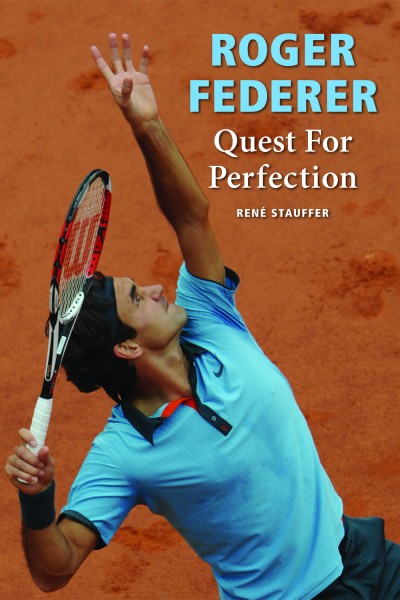
“Roger Federer: Quest for Perfection” ($19.95, www.RogerFedererBook.com) was written by Rene Stauffer, the esteemed Swiss tennis journalist who has covered Federer since the budding tennis champion was a 15-year-old. The book chronicles Federer’s life as tempermental junior player, through his early struggles on the ATP Tour and his break-through win at Wimbledon in 2003 and winning his record-breaking 15th major singles title at Wimbledon in 2009. The book also focuses on Federer’s values, how he has been marketed, his relationship with the media as well as his numerous charitable pursuits.

“The Education of a Tennis Player” ($19.95) is the memoir of Rod Laver that focuses mainly on his famous 1969 Grand Slam season, capped off by his win over fellow Australian Tony Roche in the final of the U.S. Open. Laver also writes about his childhood and early days in tennis, his 1962 Grand Slam and offers tips on how players of all levels can improve their game. He also shares some of the strategies that helped him to unparalleled success on the tennis court.

“The Bud Collins History of Tennis” ($35.95, 784 pages) is the ultimate compilation of historical tennis information written by the world’s most famous tennis journalist and tennis historian. The book includes year-by-year recaps of every tennis season, biographical sketches of every major tennis personality, as well as stats, records, and championship rolls for all the major events. The author’s personal relationships with major tennis stars offer insights into the world of professional tennis found nowhere else.

“The Wimbledon Final That Never Was” ($15.95) details the life and times of Hall of Famer and Wimbledon champion Sidney Wood with a focus on one of the most unusual episodes ever in sport when he won the men’s singles title at Wimbledon by forfeit. Wood, who passed away in 2009 at the age of 97, tells the story of how he won the title over Frank Shields, his school buddy, doubles partner, roommate and Davis Cup teammate – and the grandfather of actress and model Brooke Shields – when Shields was ordered by the U.S. Tennis Association (USTA) to withdraw from the final to rest his injured knee in preparation for a U.S. Davis Cup match following Wimbledon. He then discusses his “private understanding playoff” that saw his match with Shields at the Queen’s Club tournament final in London three years later be played for the Wimbledon trophy. Other fascinating tales from Hollywood and tennis through the years are also shared in this wildly entertaining book.

“Jan Kodes: A Journey To Glory From Behind The Iron Curtain” ($49.95) by Jan Kodes, is a coffee table book that provides a narrative and illustrated history of Czech tennis through the eyes of Kodes and author Peter Kolar. The book, filled with hundreds of unique and personal photographs, documents the successful journey of Kodes from political turmoil of the Cold War to international tennis fame, detailing the early days of darkness and family persecution in communist Czechoslovakia and the complexities of becoming a professional tennis player under a totalitarian regime. Entertaining anecdotes featuring Czech tennis legends Ivan Lendl and Martina Navratilova are also featured as well as the stories behind Kodes’ victories at Wimbledon and the French Open and his two runner-up finishes at the U.S. Open.

“Acing Depression: A Tennis Champion’s Toughest Match” ($19.95, www.CliffRicheyBook.com) was written by former U.S. No. 1 Cliff Richey along with his oldest daughter Hilaire Richey Kallendorf and details the life and tennis career of Richey, providing readers with his real-life drama – on and off the tennis court. Richey’s depression is a constant theme, from his genetics and family history, to the tensions of his professional tennis career and family life, to his eventual diagnosis and steps to recover from his condition. This book inspires people to never to give up, no matter how difficult life may be.

“Tennis Made Easy” ($19.95) by Kelly Gunterman is an accessible, concise and informative paperback guide that offers sensible and simple instruction, explained in a clear, jargon-free format, drawn from 30 years of tennis coaching. Effective for tennis players of all levels, this workbook includes a wealth of tactics, strategies, and definitions that is perfectly suited for beginners to the sport. Integrating productive and enjoyable practice drills, a wide range of topics are explored-gripping the racket, perfecting your serve, positioning, pressuring the opponent, and how to play singles or doubles. Clear information on choosing equipment and deciding what to pack in a tennis bag is also included.

“On This Day In Tennis History” ($19.95, 528 pages, www.TennisHistoryBook.com), by Randy Walker is a fun and fact-filled compilation that offers anniversaries, summaries, and anecdotes of events from the world of tennis for every day in the calendar year. Presented in a day-by-day format, the entries into this mini-encyclopedia include major tournament victory dates, summaries of the greatest matches ever played, trivia and statistics as well as little-known and quirky happenings.

“A Player’s Guide To USTA League Tennis” ($14.99) by Tony Serksnis is an engaging tutorial that explains the ins and outs of being on a tennis team and provides a blueprint for managing and competing within the team structure. The book also provides strategies, concepts and tips on everything from pre-match preparations to maintaining team chemistry. This is not a book on the “how to” of tennis strokes or play, but rather a blueprint for a team to operate effectively towards their goals.

Other titles published by New Chapter Press include “Boycott: Stolen Dreams of the 1980 Moscow Olympic Games” by Tom Caraccioli and Jerry Caraccioli (www.Boycott1980.com), “The Lennon Prophecy” by Joe Niezgoda (www.TheLennonProphecy.com), “How To Sell Your Screenplay” by Carl Sautter, “Bone Appetit, Gourmet Cooking For Your Dog” by Susan Anson and “The Rules of Neighborhood Poker According to Hoyle” by Stewart Wolpin. Founded in 1987, New Chapter Press is an independent publisher of books and part of the Independent Publishers Group. More information can be found at www.NewChapterMedia.com

Next Page »

Primary Sidebar

Search the site

Randy Walker

Michael Zheng Caps Historic Sports Weekend For Columbia With NCAA Singles Title (Played In The Fall This Year)

November 24, 2024 By Admin

The Winding Final Year of Rafael Nadal’s Career Meets Its End In The Davis Cup Finals

November 19, 2024 By Admin

Ukraine Wins BJK Cup Match In Texas On Same Day When Russia Slams Their Nation With Over 200 Missiles

November 18, 2024 By Admin

Daniel Nestor Snubbed For Tennis Hall of Fame One Year After Slightly Less-Accomplished Leander Paes Gets Inducted

October 24, 2024 By Admin

More Posts from this Category

Sell your home fast in New York

Recent Posts

  • Neale Fraser Achieved (And Experienced) Things At The U.S. Championships That May Never Be Repeated
  • Common Racquet Mistakes
  • Juan Martin del Potro Bids Goodbye To Competitive Tennis In Exhibition Against Novak Djokovic

Popular Links

  • ATP World Tour
  • Tennis Grandstand
  • USTA
  • WTA Tour

Footer

Contact Us

c/o Randy Walker

Owner

1175 York Ave

Suite #3s

New York, NY 10065

Recent

  • Neale Fraser Achieved (And Experienced) Things At The U.S. Championships That May Never Be Repeated
  • Common Racquet Mistakes
  • Juan Martin del Potro Bids Goodbye To Competitive Tennis In Exhibition Against Novak Djokovic
  • Patrick Mouratouglou Talks About New Zephyrhills, Florida Tennis Academy
  • Juan Martin del Potro “Farewell Match” Against Novak Djokovic Sponsored By Aleph

Search

Copyright © World Tennis Magazine 2021 and beyond